A New Educational Paradigm

Beyond Mere Knowledge.
Skills for Life Long Learning.

Skillgogy is the 21st-century learning model focusing on executable skills to prepare learners for emerging demands. Moving beyond Pedagogy, Andragogy, and Heutagogy. It integrates Nai Talim (New Education) concept given by Mahatma Gandhi, highlighting the 3Hs - Head, Heart and Hand - in learning.

Interactive Teaching Assistant

Meet Duishen

Chat with 'Duishen' and explore teaching-learning ideas!

Duishen

Teaching-Learning Assistant

Chat with 'Duishen' and explore teaching-learning ideas!

Duishen Studio

Active • Ready to assist

The Evolution of Learning

How Skillgogy builds upon and transcends traditional educational frameworks.

1

Pedagogy

Teacher-led Learning

Focuses on transmitting knowledge to children. The teacher directs what, how, and when something is learned.

2

Andragogy

Adult Learning

Self-directed learning for adults, drawing on life experiences to solve problems.

3

Heutagogy

Self-determined Learning

Highly autonomous. Learners determine their own goals, path, and process.

Skillgogy

Skill-Focused Actionable Learning

The latest advancement. It integrates the role of teacher as a facilitator, heavily emphasizing executable skills and real-world application to meet 21st-century demands.

Core Philosophy

Rooted in the concepts of Eklavyaism and the facilitative approaches seen in texts like Duishen and Divaswapna, Skillgogy shifts the paradigm from rote learning to practical execution.

  • EduSoMedia Integration Utilizing social media, podcasts, and digital tools for immersive learning.
  • Teacher as Facilitator Educators act as collaborators, guiding students rather than dictating.
  • Sustainable Education Moving beyond exam-centric models to foster lifelong, adaptable skills.
Pedagogy
Andragogy
Heutagogy
Skillgogy

Insights in Motion

Listen and watch presentations on Skillgogy, EduSoMedia, and EklavyaParv.

Understanding EduSoMedia & Skillgogy

A deep dive into the integration of modern media into educational frameworks.

Learning Radio Podcast

Award-winning podcast series discussing the nuances of 21st-century education and Eklavyaism.

Inspiring Talks

Thought-provoking discussions on education and skill-building.

Introducing Skillgogy

A 21st Century Model of Learning

It is mentioned with a responsible pride that the concept of Eklavyaism gave us this lens of looking at the coining of 'Skillgogy' from Peda, Andra and Heuta approaches. Mahatma Gandhi's NAI TALIM has been an identical methodology to craft lifelong learners. The limitation might be exposure to the modern demands of employability. Creativity and sense of innovation in NAI TALIM and other alternative education models are certainly high and sustainable. But the limitation of a globally-prescribed smartness put such wonderful learners on the backfoot. Train them in hard skills, and manual skills but do not forget to impart SOFT SKILLS. Our concept of Skillgogy aims at a significant preference to inculcate a 'learning attitude' towards soft skills, most particularly different Languages and other self-management skills, including the 4 skills of Communication, Creativity, Collaboration and Critical Thinking.

The natural way of learning by doing, documented as Nai Talim is also an influence on this concept. The teaching in Skillgogy is certainly learner-oriented because it does not put the teacher in the background labeling him as a facilitator. It is the role of a collaborator that the instructor has to take to realise the scope of Skillgogy. It has been a long time since we have modified Bloom's Taxonomy, evolved Andragogy and appreciated Heutagogy to deliver autonomy to the learners. The preference to commit autonomy and making learning 'child-centric' we forgot that teachers were required to be kept in the loop. It cannot be a business-driven model when it comes to giving sustainable education.

We cannot prepare students only for one examination and then abandon them to learn themselves. Similarly, career-focused education also needs to promise that education is not given only for the first job but for the last job as well. In this sense, the teaching-learning process needs to be accommodating for experiential learning as well as futuristic.

Skillgogy advocates a '.exe' approach to teaching any concept. As we develop Skillgogy based on Pedagogy, Heutagogy and Andragogy, there is no discovery but the evolution of a hybrid model of learning. We are adding the 'executable' components, that the learner can actually 'possess' after the learning process concludes.

Components

  • Skill Orientation
  • Learner Autonomy and Guidance Balance
  • Adaptive Learning Framework
  • Skill Assessment Metrics
  • Technology Integration
  • Feedback Ecosystem

Features

  • Blended Learning Approach
  • Scaffolded Learning
  • Interdisciplinary Application
  • Personalized Learning Pathways
  • Collaboration-Centric Design
  • Contextual Relevance
Action-Oriented Teaching Framework

Curriculum & Lesson Planning

Empowering educators to translate syllabus topics into executable skills anchored in the UN Sustainable Development Goals.

A Defined Model of Skill Development in the Curriculum

Skillgogy is both a philosophy of teaching-learning and an operational curriculum model. Traditional education frequently confines learning to memorization and exam performance. Skillgogy turns every lesson into an inquiry-based challenge where students don't just "know about" a concept—they build an executable capability (.exe).

Central to this methodology is the integration of the United Nations Sustainable Development Goals (SDGs) and Mahatma Gandhi's Nai Talim (3Hs: Head, Heart, and Hand). Teachers act not as distant lecturers or passive proctors, but as collaborative guides co-creating solutions with their students.

1. UN SDG Alignment

Every lesson plan is anchored in one or more of the 17 UN SDGs (such as Quality Education SDG 4, Decent Work SDG 8, or Climate Action SDG 13), connecting classroom learning to urgent global challenges.

2. The 3H Synthesis

Integrating Gandhi's Nai Talim across three interdependent dimensions:

Head (Inquiry) Heart (Empathy) Hand (Craft)

3. The .exe Outcome

Replacing passive knowing with tangible, executable outcomes. By lesson conclusion, the learner possesses an observable skill, prototype, audit, or creative asset.

4. EduSoMedia Workflow

Utilizing micro-podcasts, audio journals, digital storytelling, and collaborative critique to cultivate essential 21st-century soft skills and communication.

Explore Skillgogy Lesson Blueprints

See how different disciplines integrate 3H dimensions, executable outcomes, and SDGs.

Grade 7–9 Science SDG 6 & 13

Water Security & Eco-Filtration

  • Head: Hydrological cycles, chemical analysis of contaminants, and local water data.
  • Heart: Empathy for water-stressed regions; understanding water equity as a human right.
  • Hand: Assembling a functioning bio-sand filter and conducting an audit of school water fixtures.
  • .exe: Campus Water Audit & Action Report + 2-min advisory podcast.
Grade 9–11 English & Arts SDG 4 & 5

Empathetic Storytelling & Equality

  • Head: Rhetorical structures, persuasive interviewing, and analyzing media bias.
  • Heart: Active listening, challenging gender stereotypes, amplifying marginalized voices.
  • Hand: Scripting, recording, and audio-editing an oral history podcast episode.
  • .exe: Broadcast-ready EduSoMedia audio profile of a local community educator.
Grade 10–12 Math & Economics SDG 8 & 12

Circular Economics & Enterprise

  • Head: Unit economics, linear depreciation, and waste reduction mathematics.
  • Heart: Ethical labor principles, sustainable consumption, curbing throwaway culture.
  • Hand: Designing a financial spreadsheet model and prototyping an upcycled school product.
  • .exe: Student-led Zero-Waste Venture Financial Model and pitch deck.
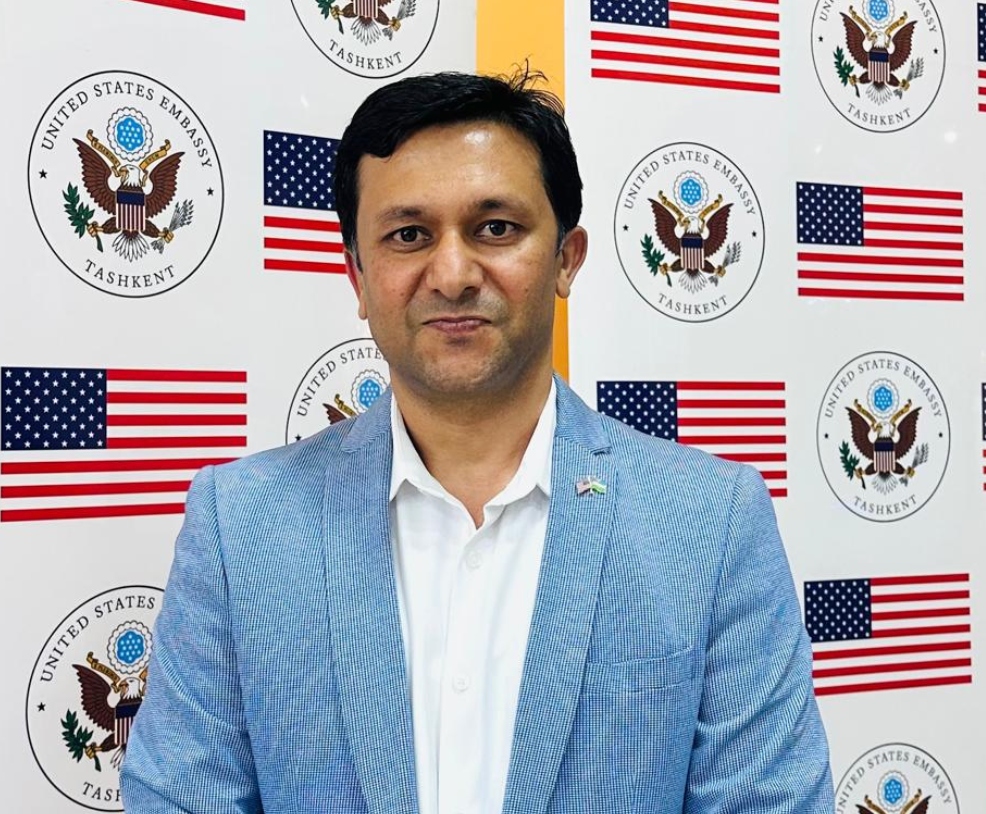
Parveen Kumar Sharma
The Pioneer

Parveen Kumar Sharma

Innovator, Educator, Podcaster

Parveen Kumar Sharma is the visionary behind Skillgogy, EduSoMedia, and EklavyaParv. An award-winning educational podcaster and thought leader, he advocates for a sustainable, student-centered learning environment.

His work challenges the traditional business-driven educational models, pushing for a future where education focuses on real-world capabilities and executable skills.

Duishen • Teaching Assistant